


Are Your Chemicals Sleeping with the Enemy? The Invisible Art of Chemical Compatibility
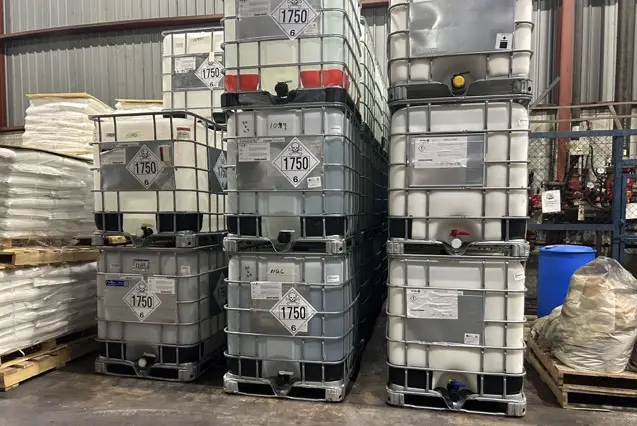
When you walk into a warehouse, your eye is immediately drawn to the physical layout: the height of the racks, the width of the aisles, the smooth movement of the forklifts. It’s a logistical view of the space. Yet for anyone who handles hazardous materials, this view is incomplete—even dangerous. The real challenge of chemicals storage lies not in the strength of the steel shelves, but in the invisible interactions taking place between the containers.
The crucial question every Health and Safety (EHS) manager or warehouse supervisor should ask is: Are your chemicals sleeping with the enemy?
Science Before Logistics: Why Your Current Methods Are Your Worst Enemies
The most common mistake in industrial settings is to classify products using purely administrative, logistical, or visual methods. While this approach is convenient for inventory purposes, it ignores the fundamental science of chemical properties and creates a false sense of security.
The Danger of Conventional Classification:
- Alphabetical Order: This is undoubtedly the most dangerous practice. It can place an oxidizer (e.g., nitric acid) right next to a flammable alcohol (e.g., isopropyl alcohol), creating an immediate risk of fire or explosion in the event of a leak.
- Classification by Usage or Format: Grouping all cleaners together or aligning products by container size makes handling easier but can force the cohabitation of highly reactive substances.
- The Illusion of GHS/WHMIS Pictograms: Relying solely on WHMIS symbols is an inadequate strategy. These pictograms are general warnings, not segregation guides. Two products displaying the same “flame” or “corrosion” symbol may be violently incompatible with each other.
Safe storage relies on scientific segregation. Segregation isn’t just about organizing; it’s about strategically isolating substances that, if they were to come into contact as a result of a breakage or leak, could cause fires, explosions, or toxic gas clouds. To achieve this, you have to look beyond the brand label and delve into the actual reactivity of the hazard classes.
Table of Common Storage Problems
| Incorrect storage type |
Related products |
Product Information |
Hidden Real Dangers (Incompatibility) |
|
Alphabetical order or identical icon |
Acetic acid Nitric acid |
Corrosive acid, flammable Corrosive acid, oxidizer |
Two strong acids, but one is flammable and the other is a powerful oxidizer. Significant fire hazard. |
|
Alphabetical order |
Citric acid Sodium azide |
Irritant (acid) Toxic |
Contact between the two releases a highly explosive and toxic substance (hydrogen azide). |
|
By use (Household) |
Liquid drain cleaner Descaling cleaner (or limescale remover) |
Corrosive Corrosive |
Two corrosive substances (strong base vs. strong acid) - Reaction may be explosive and generate a large amount of heat. |
|
By application (Welding) |
Acetylene Oxygen |
Flammable gas Oxidizing gas |
The worst possible combination: a highly flammable gas mixed with an oxidizer. |
|
By identical pictogram (flamme) |
Picric acid Sodium |
Flame (must be moistened or there is a risk of explosion) Flame (releases a highly flammable and explosive gas when it comes into contact with water) |
A firefighter's nightmare: Picric acid needs water to remain stable (moistened), while sodium explodes and ignites on contact with water. In the event of a fire, spraying water saves one side but blows up the other. |
The Risk Triangle: Reactivity, Incompatibility, and Catastrophe
To understand why compatibility is the cornerstone of your warehouse, you need to analyze the consequences of poor compatibility.
1. Oxidizers and Flammables
This is the classic scenario. An oxidizer provides the oxygen needed to fuel a fire exponentially. If you store organic peroxides next to flammable solvents, you’re creating a thermal bomb. In the event of a fire, the oxidizer will render any attempt at conventional firefighting virtually useless.
2. Acids and Bases: The Same Classification Trap
Here is a key point to watch out for: acids and bases often share the same hazard classification (Corrosive). However, mixing them causes a violent exothermic reaction. Simply grouping all “corrosives” together is a serious mistake. It is essential to go beyond the simple “corrosive” label and physically separate these two categories (Acids – Bases) to prevent the release of intense heat capable of melting adjacent containers.
3. Water or Air Reactive Products
Some products don’t even need to be stored near other substances to become hazardous. A storage facility that fails to account for humidity or the presence of sprinklers (for water-reactive products) is a design flaw that can prove fatal.
It is important to have chemical knowledge and understanding when storing hazardous materials. The examples above cover the basics of storage, but some products pose more than one hazard and must be taken into account for safe storage.
The Safety Data Sheet (SDS): Why Prioritize Transport Classification (TDG)?
Safety begins with a rigorous reading of the SDS, particularly Sections 7 (Handling and Storage) and 10 (Stability and Reactivity). However, when it comes to the practical organization of a warehouse, an expert’s secret must be applied: Transportation of Dangerous Goods (TDG) classification is often a more reliable guide than WHMIS classification.
Why prioritize TDG for your shelves?
- Similar Contexts: Storage is technically similar to transportation, as in both cases, the hazardous chemical is in its original sealed container. The TMD classification is specifically designed to manage the risks of packaged products, making it better suited for segregating physical hazards in a warehouse.
- Regulatory Alignment: This approach is also the one recommended by the National Fire Code (NFC). By using the transportation classes (Classes 2, 3, 4, 5, 6, 8, etc.), you obtain a segregation structure recognized by fire authorities.
The Corrosive Trap: Going Beyond Class 8
It is crucial to note a major limitation of current classification systems: for both transportation (Class 8) and WHMIS, all corrosives are classified together. The system does not automatically distinguish between an acid and a base.
Since these two groups are incompatible and can react violently, simply following the hazard class is not enough. Additional expertise is needed to identify the product’s actual chemical nature and ensure that your acids and bases do not share the same spill containment tray or shelf section.
The Regulatory Aspect: A Complex Puzzle
In Quebec and Canada, storage compliance is not dictated by a single regulation, but by a combination of several overlapping standards. This is where management can become a headache:
-
OHS Regulations (RSST/COHSR)
: Which integrate WHMIS requirements for labeling and information. -
National Fire Code (NFC)
: Which dictates segregation distances and maximum volumes. -
NFPA 30
-
Building Code
: Which governs physical structure and fire resistance. -
Municipal Requirements
: Local fire departments often have specific standards based on zoning. -
Insurers
: Who may impose additional constraints to cover industrial risk.
The Kalium Method: A Rigorous Approach to Classification
At Kalium Solutions, we believe that business autonomy depends on mastering classification. Our approach is not to sell you a standardized procedure, because every industrial setting is unique.
Here are the pillars of a compatibility-based storage system:
-
In-depth product knowledge
: This is the foundation of safety. You cannot manage compatibility without mastering the intrinsic characteristics of each substance (Safety Data Sheets, physicochemical properties, reactivity). -
Zone Signage
: Strict visual assignment using both pictograms and transport (TDG) classes. -
Spill Management
: Use of appropriate secondary containment (spill pallets) based on the chemical nature of the product. -
Access control
: Lock the premises to restrict access to qualified personnel only. -
Training
: Teaching employees to identify key sections of the SDS to make safe decisions in real time.
From Diagnosis to Solution: How to Secure Your Warehouse with Kalium
Understanding the hazard is the first step, but adapting your day-to-day operations to the scientific realities of your products is another. Because every company has different volumes and circumstances, Kalium Solutions has carefully developed two practical tools to ensure your compliance and safety:
Companies with a large volume of hazardous products
Our warehousing and risk management software. This intelligent tool fully automates the segregation of your substances. It eliminates the human error factor by instantly calculating the chemical compatibility of your inventory on a large scale.
The Turnkey Solution from Kalium Solutions
For us, a “turnkey” service doesn’t just mean installing physical storage racks. It’s about building a system where science is integrated into every inventory movement. We offer comprehensive support to secure your facilities. The process is simple:
- Data Collection: You provide us with a list of your products.
- Classification: We conduct an in-depth analysis of not only the primary hazards of each substance, but also their secondary and tertiary risks (subsidiary classes).
- Comprehensive Assessment: This thorough evaluation is the only effective method for detecting all incompatibilities and isolating hazardous materials. As a result, we produce a detailed assessment of your current storage by location.
- Optimization: We define the minimum segregation required and precisely identify incompatible products, thereby eliminating any risk of accidental cross-reaction within your storage area.
Kalium Incompatibilities Chart
Ideal for maintaining the sustainability of the segregation work performed by the software, the turnkey service, or during our on-site audits. Displayed directly in the warehouse, this simple yet rigorous visual guide allows your teams to verify storage compliance at a glance.
Conclusion: Achieve Peace of Mind
The real danger in a chemical warehouse isn’t the product itself, but ignorance of its surroundings. The safety of your facilities and the lives of your workers should never depend on luck, but on rigorous classification.
Ask yourself: If a WorkSafeBC, CNESST, Transport Canada, or local fire department inspection took place tomorrow morning, would you be able to justify the location of every container with a real hazard analysis?
Whether through our consulting services or our specialized storage training, we don't just give you rules—we provide the tools to build your own procedures, tailored to your industrial reality.
Ready to transform your risk management?


Design, programming and hosting by VisionW3.com

