


VOC regulations for Certain Products in Canada
Since January 1, 2023, manufacturers and importers of consumer and commercial products in Canada have been facing a significant regulatory shift. The Volatile Organic Compound Concentration Limits for Certain Products Regulations now impose strict requirements on 130 specific product categories, ranging from personal care items to automotive maintenance products and adhesives.
Understanding these limits is no longer optional—it is a legal necessity for market access. Whether you are dealing with concentration caps, specific labeling requirements, or the complex alternative compliance options (such as the permit system), staying informed is key to avoiding costly delays. In this second part of our series, we break down exactly what you need to know to ensure your portfolio remains compliant and how to manage the administrative burden effectively.
However, the VOC concentration limits, and maximum emission potentials will come into force on January 1st, 2024 for all categories except for disinfectants which will be given an additional year before entering into force on January 1st, 2025. If a company cannot meet the concentration and emission potential requirements, the regulation provides three alternative compliance options. Companies will be able to use the year 2023 to take the necessary steps to benefit from one of these options.
What options are available to businesses ?
- A two-year temporary permit with evidence of technical or economic non-feasibility to meet the requirements for their product. The applicant will also be required to provide a plan identifying measures to ensure compliance with the limits once the permit expires.
- A permit renewable every 4 years for products whose use results in lower VOC emissions. This permit is designed for innovative products. Specifically, this permit applies to products with a maximum VOC concentration above the limit, but the use of which, in accordance with the manufacturer's written instructions, results in lower VOC emissions than would result from the use of a compliant product in the same category. The applicant will be required to provide evidence for the obtention and renewal of the permit.
- A VOC compliance unit trading system. Companies will need to obtain a permit for their products exceeding the regulatory limit. They will have to submit a plan to compensate for the excess VOCs. Offsetting can be done either by creating compliance units from other compliant products or by exchanging units with another company. Companies wishing to use this option will be able to take advantage of 2023 to apply for permits, submit notices of intent to create compliance units and create them.
For more information, please see our Dedicated page
For more information, please consult the Government Regulatory Fact Sheet.
Important dates to remember:
January 1st, 2023:
- Coming into force of the Volatile Organic Compound Concentration Limits for Certain Products Regulations
- Choice of compliance option and permit applications if applicable
January 1st, 2024:
- Coming into force of VOC limits for all categories listed in Schedules except for disinfectants
January 1st, 2025:
- VOC limits for disinfectants comes into force
Conclusion: Streamlining VOC Compliance with Technology
Navigating the complexities of the VOC concentration limits for 64 different categories is a significant undertaking for any regulatory team. Between tracking formula changes, ensuring accurate labeling, and maintaining the required five-year record-keeping trail, the risk of oversight is real.
As the 2026 milestones are now in full effect, manual tracking is no longer a viable long-term strategy. At Kalium Solutions, we understand that compliance should be a bridge to market success, not a barrier.
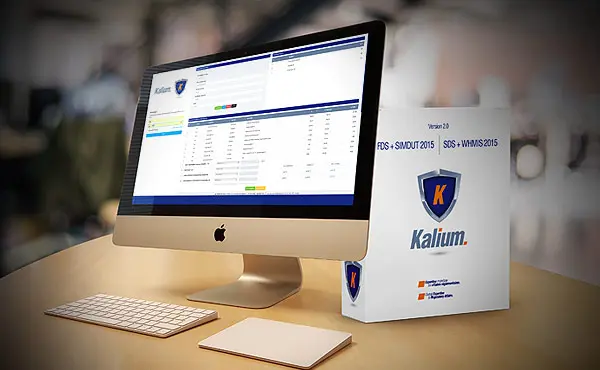
The Future of Compliance Management To help you manage these challenges, we are developing a dedicated SDS & VOC Management Software. Designed to integrate seamlessly with your existing workflows, our solution will:
Automatically calculate VOC concentrations based on your chemical inventory.
Flag compliance gaps against the latest Canadian regulations.
Centralize documentation for effortless record-keeping and audits.
Don’t let regulatory shifts slow down your innovation. Contact us today to learn more about how our upcoming software can transform your compliance process, or subscribe to our newsletter for exclusive updates on our launch.
If you need help calculating and identifying the VOCs / low vapor pressure VOCs of your products, do not hesitate to contact the Kalium team at 450 906-6999.


Design, programming and hosting by VisionW3.com

